The Blush Placement Trick That Changes Your Whole Face Shape
The surprisingly powerful makeup detail that can lift, soften, or sculpt your face.
Blush is often treated as the simplest step in a makeup routine. A quick sweep of color across the cheeks, maybe a little blending, and then you move on to the rest of your makeup. For many people it is just the finishing touch that makes the face look healthier.
But makeup artists see blush very differently. To them, blush is not just about adding color. It is about shaping the face. The exact placement of blush can make the face appear lifted, softer, slimmer, or more youthful depending on where the color is applied.
This is why professional makeup artists working backstage at shows for magazines like Vogue and Allure spend so much time adjusting blush placement. The difference between placing blush slightly higher or slightly lower can change how the entire face appears in photos.
Once you understand how blush placement works, it becomes one of the easiest makeup tricks to transform your look without adding any extra products.
Why Blush Placement Changes Face Shape
Blush works because of how the human eye interprets color and light. When a warm or rosy color appears on the face, it mimics the natural flush that happens when blood circulation increases in the cheeks. This natural effect has long been associated with health and vitality, which is why blush has been used in cosmetics for centuries.
But beyond color, placement also guides the viewer’s attention. The eye naturally follows areas of brightness and color across the face. When blush is placed higher on the cheeks, the eye moves upward, which can make the face appear lifted.
When blush is placed lower or more toward the center of the face, it creates softness and roundness. Makeup artists who study facial proportions within fields like Cosmetology often use blush placement almost like subtle contouring. Instead of using shadows, they use color to shape the face.
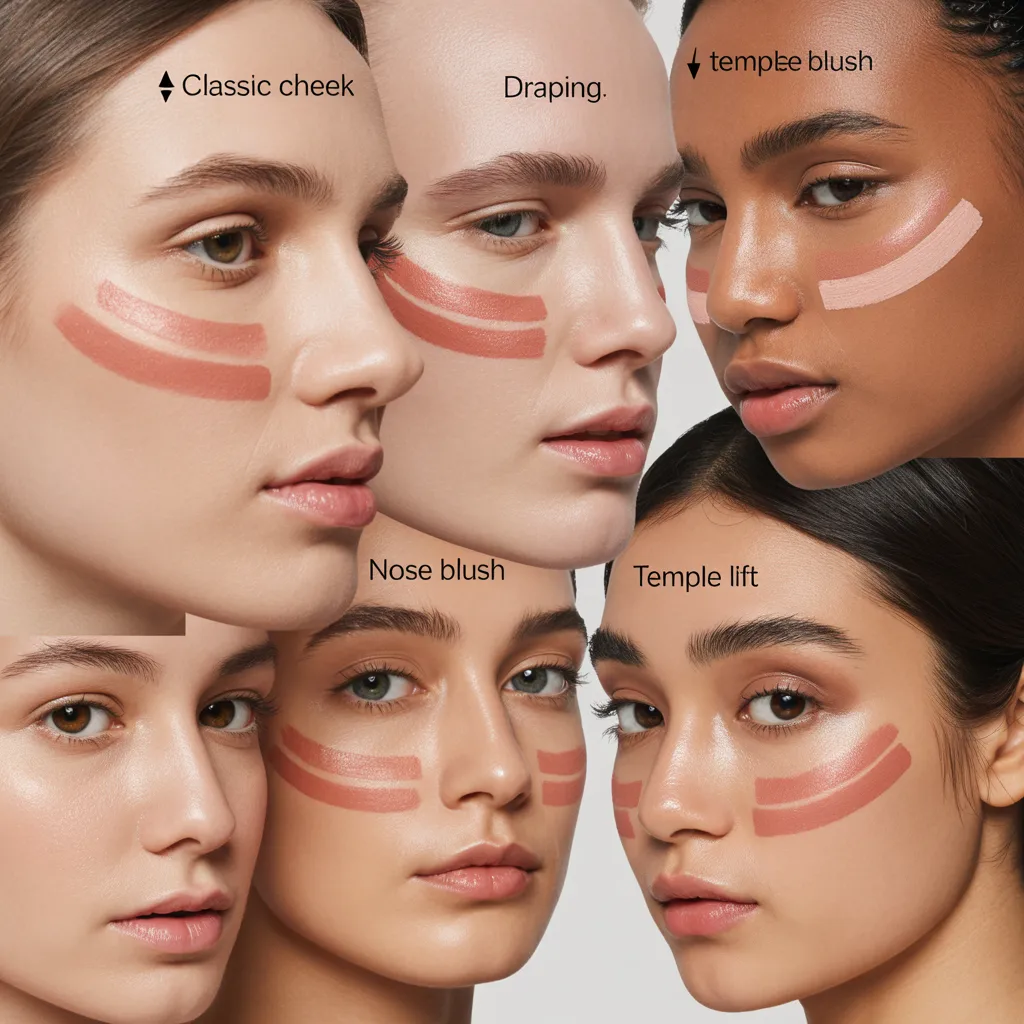
The Traditional Blush Placement
For many years, the most common way to apply blush was on the apples of the cheeks. The apples are the roundest part of the cheeks that become visible when you smile. Applying blush here creates a youthful, natural flush because it mimics where blood flow naturally appears.
This placement works especially well for people with longer or more angular faces because it adds softness and fullness to the center of the face.
However, while this technique creates a sweet, youthful look, it does not necessarily lift the face. In some cases it can make the face appear slightly rounder. That is why many modern makeup artists use a slightly different technique.
The Lifting Blush Technique
One of the most popular modern blush techniques focuses on lifting the face. Instead of placing blush directly on the apples of the cheeks, the color is applied higher on the cheekbones, slightly angled toward the temples.
This technique creates a subtle visual lift. Because the color sits higher on the face, the eye naturally follows the upward direction of the blush. The result is a more sculpted and elongated appearance.
This technique has become especially popular on social media because it creates a flattering effect that photographs well.
To recreate it, start by placing blush on the outer part of the cheekbone and blending upward toward the temple rather than downward toward the center of the cheek. The movement of the brush should always follow an upward direction.
The Soft “Sun-Kissed” Blush Trend
Another blush placement that has become popular recently is the sun-kissed blush technique. Instead of focusing only on the cheeks, this method blends blush lightly across the upper cheeks and slightly over the bridge of the nose.
This placement mimics the natural flush people get after spending time in the sun. The effect feels relaxed and youthful because it spreads warmth across the center of the face rather than concentrating color in one spot.
Sun-kissed blush works particularly well with cream blush formulas because they blend smoothly into the skin and create a natural glow.
The “Blush Draping” Technique
Blush draping is a technique that originally became popular decades ago and has recently returned to modern makeup trends.
Instead of using bronzer or contour powder, blush itself is used to sculpt the face. In this technique, blush is applied along the cheekbones and blended slightly upward toward the temples and sometimes even toward the outer corner of the eye.
The color creates a gentle shadow and highlight effect that shapes the face naturally. Because blush tones are softer than traditional contour shades, the result feels more natural and fresh. This technique works especially well with slightly deeper blush colors like rose, berry, or terracotta.
The “Under-Eye Blush” Trend
Another trend that has recently gained attention involves placing blush slightly higher than usual, close to the under-eye area.
This placement creates a soft, almost dreamy flush that spreads across the upper cheeks. The technique is inspired by certain Japanese and Korean makeup styles that emphasize youthful, fresh-looking skin.
Because the blush sits close to the eyes, it draws attention upward and creates a delicate softness across the center of the face. When blended carefully, this technique can make the face appear brighter and more playful.
Choosing the Right Blush Placement for Your Face Shape
While trends change frequently, the best blush placement often depends on the natural structure of your face.
People with round faces often benefit from higher blush placement along the cheekbones because it elongates the face.
People with longer faces may prefer blush placed slightly lower or more centered to add balance and softness.
For square or angular faces, blending blush slightly outward toward the temples can soften strong lines in the jaw and cheekbones.
Rather than following one universal rule, many makeup artists experiment with placement until they find the balance that works best for each individual face.
Cream vs Powder Blush Placement
The type of blush formula can also influence how the placement looks. Cream blush tends to blend more naturally into the skin, which makes it ideal for soft, diffused placement techniques. It often creates a dewy finish that looks like natural skin.
Powder blush provides more control and structure, which works well for sculpting techniques like blush draping. Many makeup artists combine both formulas. A cream blush may create the base color, while a light powder blush layered on top adds depth and longevity.

The Blending Secret
No matter where blush is placed, blending is the step that determines whether the result looks natural. Blush should melt gradually into the skin rather than forming a clear edge where the color begins.
Using a fluffy brush or a damp makeup sponge can help soften the edges of the color. The goal is for the blush to look like part of the skin rather than a separate layer of makeup. This soft blending is what gives modern blush techniques their effortless appearance.
Why Blush Is Having a Major Comeback
For many years, makeup trends focused heavily on contouring and bronzing. Recently, however, blush has returned as one of the most important steps in makeup routines.
Many beauty enthusiasts now prefer blush because it adds life to the face without the heaviness of strong contour products.
A well-placed blush can lift the face, soften sharp angles, and create the healthy glow that people often associate with natural beauty.
The Small Detail That Changes Everything
Blush might seem like a small part of a makeup routine, but it has the power to change how the entire face appears. A slightly higher placement can lift the cheeks. A softer placement can create a youthful glow. A blended sweep across the cheekbones can sculpt the face without harsh lines.
Once you start experimenting with blush placement, you realize it is not just about adding color. It is about guiding the shape of the face. And sometimes one small brush of color can quietly change everything.