Why Your Makeup Looks Better After 30 Minutes
The quiet transformation that happens after you finish getting ready.
Almost every girl has noticed this at least once. You finish your makeup, look in the mirror, and something feels slightly off. The foundation looks a little too fresh, the blush feels slightly obvious, and the whole look appears a bit more “made up” than you expected.
But then something strange happens. Thirty minutes later, you catch your reflection again, maybe in a store window or the front camera on your phone, and suddenly your makeup looks better. Softer. More natural. Like everything somehow blended together perfectly.
Most people assume this is just a coincidence. But makeup artists and beauty editors from publications like Allure and Vogue know that there is actually a reason for this.
Makeup does not look its best the moment you apply it. Instead, it needs a little time to settle, warm up with your skin, and blend with the natural oils on your face.
In other words, your makeup quietly adjusts itself during that first half hour. Here is what is actually happening during those thirty minutes and why your makeup often looks better afterward.
Your Skin Starts Warming the Makeup
One of the biggest reasons makeup looks better after some time is simple body heat. When foundation, concealer, and cream products are first applied, they are sitting on the surface of the skin. They have not yet interacted fully with your natural skin temperature.
As the minutes pass, the warmth of your skin slowly softens these products. This allows them to melt slightly into the skin rather than sitting on top of it. The result is a smoother appearance that looks more natural.
Professional makeup artists often talk about this process as makeup “settling.” It is the moment when the product begins behaving like part of your skin rather than something layered on top of it.
Natural Skin Oils Start Blending Everything Together
Another subtle change happens when your skin’s natural oils begin interacting with makeup. The skin naturally produces small amounts of oil throughout the day through glands that release sebum, which dermatologists study in fields like Dermatology.
Sebum might sound like the enemy, but in moderate amounts it actually helps makeup look better. When these natural oils mix slightly with foundation or concealer, they soften the edges of the product and create a more skin-like finish.
That slightly dewy look many people love often comes from this natural interaction between skincare, makeup, and the skin’s own oils. Without that small amount of oil, makeup can sometimes appear too matte or powdery.
Powder Products Relax
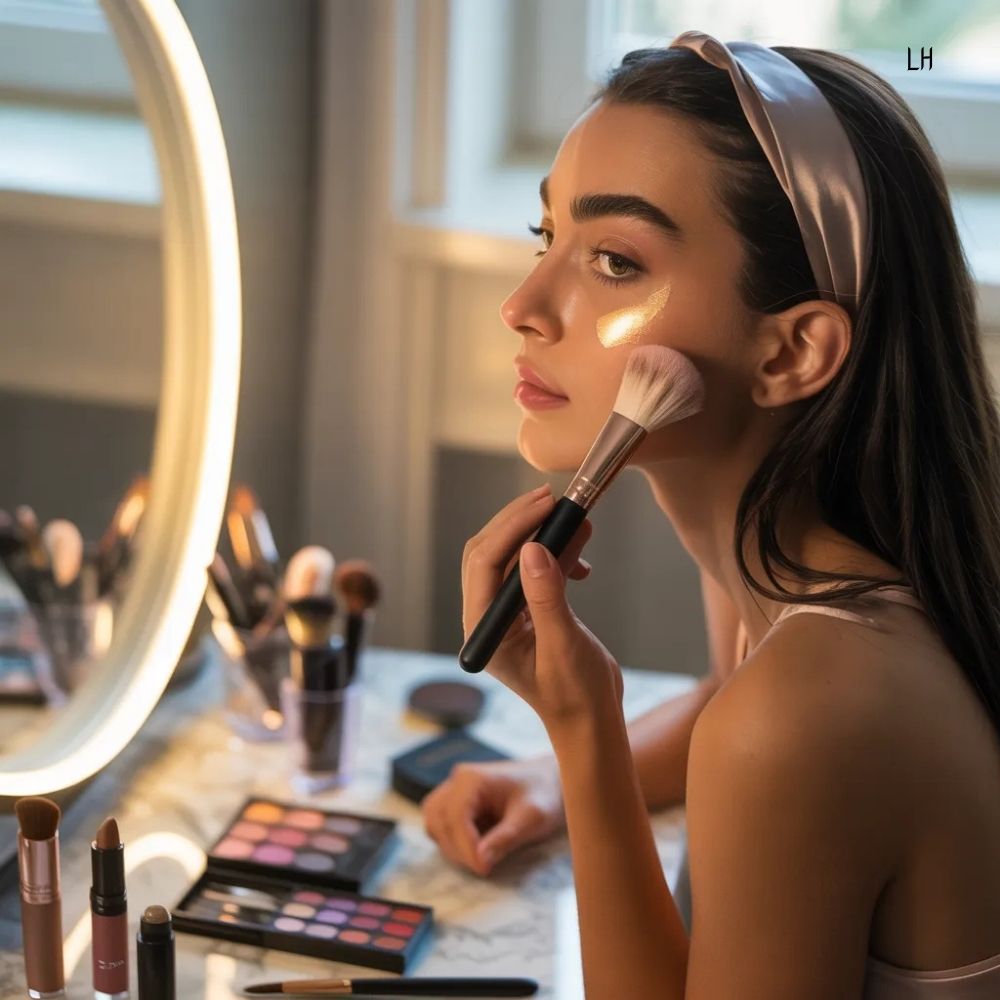
Powder is often the reason makeup initially looks a little heavier than expected. Setting powder, blush, bronzer, and highlighter sit on top of the skin at first. The pigments are still very defined when freshly applied.
But as the skin warms up and natural oils begin appearing, powders soften. The powder particles slowly merge with the foundation beneath them, which reduces that slightly dusty or overly matte appearance.
This is why many makeup artists recommend applying powder lightly rather than heavily. Too much powder prevents this natural blending process from happening. After about thirty minutes, powders tend to look more seamless and skin-like.
Your Skin Absorbs Some of the Skincare Beneath
Most people apply skincare before makeup. Moisturizer, sunscreen, and sometimes primer all create a base for makeup products. However, these skincare layers are still absorbing into the skin during the first part of the day.
As they settle, the surface of the skin changes slightly. This allows foundation and concealer to bond more evenly with the skin.
This is another reason why makeup often appears smoother after some time has passed. When skincare, foundation, and powder all settle together, the layers begin working as one cohesive surface rather than separate products.
The “Mirror Shock” Wears Off
There is also a psychological factor involved. When you finish your makeup, you have been staring closely at your face in the mirror for several minutes. Your brain becomes hyper-aware of small details that other people would never notice.
This phenomenon is similar to what psychologists sometimes describe as visual adaptation, where the brain becomes overly focused on tiny changes because it has been observing something closely.
After stepping away from the mirror and returning later, your brain resets its perception. Suddenly the makeup looks balanced and natural because you are seeing it the way other people see it.
Lighting Changes How Makeup Appears
Lighting also plays a huge role. Bathroom lighting is rarely ideal for makeup. Some lights are overly bright, while others create harsh shadows.
Later in the day, when you see your reflection in natural daylight, the makeup often looks softer because natural light diffuses color more evenly.
Many makeup artists actually recommend checking your makeup in different lighting conditions before leaving the house. A quick look near a window can give a more realistic idea of how your makeup will appear during the day.

Your Facial Expressions Blend the Makeup
Another unexpected factor is simple facial movement. Throughout the day, your face moves constantly when you talk, smile, or change expressions. These tiny movements help blend makeup even further across the skin.
Foundation and concealer that initially looked slightly defined may become smoother as facial muscles move the product naturally. This subtle movement helps makeup look less “perfectly applied” and more like part of the skin.
The “Makeup Sweet Spot”
Many makeup artists believe there is a certain moment when makeup looks its absolute best. It is usually somewhere between 20 minutes and two hours after application.
At this point:
• foundation has warmed with the skin
• powders have softened
• skincare has fully absorbed
• natural oils have blended the layers
Everything begins working together in a way that feels effortless. This is why makeup often looks particularly good in photos taken later in the day rather than immediately after applying it.
A Trick Makeup Artists Use
Because makeup tends to look better after settling, professional makeup artists often build this waiting time into their routine.
For example, when doing makeup for events or photoshoots, artists may apply foundation early and then move on to other steps like hair or eye makeup. This allows the base makeup time to settle before finishing touches like blush and highlighter are added.
Some artists even lightly mist the face with setting spray halfway through the routine to help makeup melt together faster.
How to Help Your Makeup Settle Faster
If you want your makeup to reach that “30-minute glow” more quickly, a few small habits can help. One helpful trick is applying foundation in thin layers rather than one thick layer. Thin layers blend more naturally with the skin and settle faster.
Using a damp makeup sponge can also help press foundation into the skin, which creates a smoother finish from the start.
Finally, a light mist of setting spray at the end of your routine can help soften powder products and bring everything together. These small steps help mimic the natural settling process that normally happens over time.
The Quiet Magic of Makeup
Makeup is not static. It changes throughout the day as it interacts with your skin, your environment, and even your facial expressions. That is why the moment you finish applying it is rarely the moment it looks best.
Instead, makeup slowly settles into the skin and becomes part of it. Edges soften. Colors blend. Texture smooths out.
And somewhere about thirty minutes later, you catch your reflection again and realize everything looks exactly the way you hoped it would. Sometimes beauty routines work best when you simply give them a little time.